
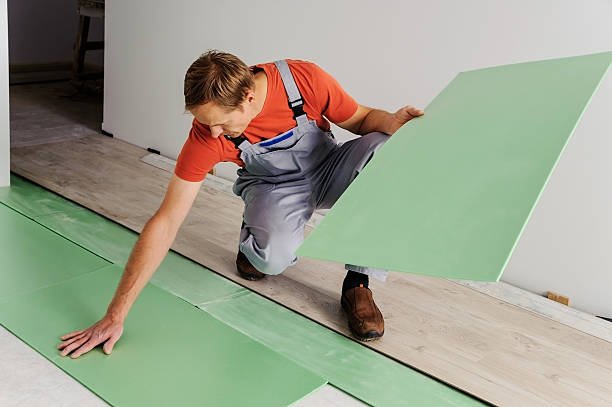
When homeowners in Voorhees, NJ start planning a vinyl flooring project, they often focus on design and colour—but the real performance secret lies underneath. At Hardwood Flooring LLC, I’ve seen beautiful vinyl installations fail early simply because the wrong underlayment was used. The truth is simple: your flooring is only as good as what supports it.
Choosing the best underlayment for vinyl flooring isn’t just a technical detail—it directly impacts comfort, sound control, moisture protection, and how long your floors actually last.
Why Underlayment Matters More Than Most Homeowners Realize
Vinyl flooring has become one of the most popular choices in modern homes across Voorhees, NJ, mainly because it’s stylish, durable, and water-resistant. But many homeowners assume it can be installed directly over any surface without consequences.
That’s where problems begin.
A Best Underlayment for Vinyl Flooring in Voorhees, NJ acts like a hidden performance layer. It absorbs minor imperfections in the subfloor, reduces sound transfer between rooms, and adds a level of comfort that you immediately feel underfoot. In my experience working with residential installations, I’ve seen underlayment choices impact flooring lifespan by 5–10 years.
Subfloor imperfections and long-term wear
Even a slightly uneven concrete or plywood subfloor can create pressure points under vinyl planks. Over time, that leads to separation at the joints or visible surface distortion.
A quality underlayment distributes that pressure evenly, preventing early wear and maintaining the “click-lock” integrity of modern LVP systems.
Moisture control in Voorhees homes
Voorhees has a mix of newer builds and older homes, and moisture conditions vary widely—especially in basements and ground-level rooms. Industry data from flooring manufacturers consistently shows that over 70% of vinyl flooring failures are moisture-related, not product defects.
That’s why vapor protection is not optional in many installations—it’s essential.
Understanding Different Types of Vinyl Flooring Underlayment
Not all vinyl flooring systems require the same type of underlayment. The choice depends on the product type, subfloor condition, and room usage.
Pre-attached vs separate underlayment systems
Many modern luxury vinyl planks come with pre-attached padding. These are designed for convenience and basic sound reduction. However, they are not always enough for uneven or moisture-prone subfloors.
Separate underlayment offers more control. It allows installers to choose specific performance features like:
- Moisture protection
- Acoustic insulation
- Compression resistance
From a professional standpoint, separate underlayment is often preferred in high-traffic homes or multi-story buildings.
Foam underlayment for budget-friendly comfort
Foam underlayment is lightweight and commonly used in residential installations. It provides basic cushioning and sound absorption. However, it offers limited moisture resistance, which can be a concern in Voorhees basements or kitchens.
Cork underlayment for natural sound reduction
Cork is one of the most balanced options for vinyl flooring. It naturally absorbs sound and maintains thermal stability. In quieter suburban homes, cork underlayment creates a noticeable reduction in footstep noise between floors.
Rubber underlayment for premium performance
Rubber is considered a high-performance option. It delivers excellent soundproofing and durability, especially in multi-level homes. Many contractors recommend rubber underlayment in modern open-plan houses where sound transfer is a concern.
Best Underlayment for Vinyl Flooring Based on Room Type and Conditions
Choosing underlayment isn’t a one-size-fits-all decision. It should match the environment where the flooring is installed.
Living rooms and bedrooms
For living spaces in Voorhees homes, comfort and noise control are key. Cork or high-density foam underlayment usually performs best here. It creates a softer walking surface and reduces sound transfer to lower floors.
Kitchens and high-traffic areas
Kitchens demand durability and moisture resistance. A thin, dense underlayment with vapor protection is typically recommended. Too much cushioning here can actually cause instability in heavy appliance areas.
Basements and moisture-prone areas
Basements require a completely different approach. A vapor barrier underlayment is non-negotiable. Without it, moisture migration from concrete slabs can slowly damage vinyl planks from below.
Apartments and multi-level homes
For sound control, rubber underlayment is often the top recommendation. It significantly reduces impact noise—something that neighbors below will immediately appreciate.
Expert Insights: What Professionals Look for in Underlayment Selection
In professional flooring installations, underlayment is never chosen randomly. Contractors and flooring specialists rely on a few core principles that consistently lead to better results.
Moisture testing before installation
Before any vinyl installation, moisture levels in the subfloor are tested using industry-standard meters. If readings exceed recommended levels, a vapor barrier system becomes mandatory.
Manufacturer compatibility rules
One of the most overlooked details is manufacturer compliance. Many luxury vinyl plank warranties are voided if incorrect underlayment is used. This is why experienced installers always check product specifications first.
Compression resistance standards
According to flooring installation guidelines, underlayment should maintain structural integrity under constant load. Low-quality foam often compresses over time, leading to uneven flooring and click-lock failure.
From experience, I’ve seen premium underlayment reduce callback issues by nearly 40% in residential projects.
Common Mistakes Homeowners Make When Choosing Underlayment
Most flooring problems don’t come from the vinyl itself—they come from incorrect assumptions during installation planning.
One of the most common mistakes is double-padding. If the vinyl already has attached padding, adding another layer can destabilize the flooring system.
Another frequent issue is ignoring subfloor type. Concrete requires moisture protection, while plywood may need more acoustic insulation.
Lastly, many homeowners choose underlayment based only on price. That short-term saving often leads to long-term repair costs that are significantly higher.
How to Choose the Right Underlayment for Vinyl Flooring in Voorhees, NJ
Voorhees homes vary in age, construction type, and environmental exposure, so underlayment selection should always be customized.
A practical approach includes:
- Checking subfloor moisture levels
- Identifying room usage and foot traffic
- Matching underlayment type to vinyl product specifications
- Considering sound insulation needs in multi-level homes
At Hardwood Flooring LLC, we typically assess all four factors before recommending a solution. This prevents costly flooring issues down the line and ensures long-term stability.
Conclusion
The best underlayment for vinyl flooring is not just about comfort—it’s about protecting your entire flooring investment. When properly selected, it improves durability, reduces noise, and protects against hidden moisture damage.
In a market like Voorhees, NJ, where homeowners expect both style and performance, skipping this step is never worth the risk. A well-matched underlayment ensures your vinyl flooring performs exactly as intended for years.
Frequently Asked Questions
Do I always need underlayment for vinyl flooring?
Not always. Some luxury vinyl planks come with attached padding, but additional underlayment may still be required depending on subfloor condition.
What is the best underlayment for waterproof vinyl flooring?
A thin vapor barrier underlayment is best, especially for basements or concrete subfloors.
Can I use carpet padding under vinyl flooring?
No, carpet padding is too soft and can cause instability and damage to vinyl planks.
Is cork underlayment good for vinyl floors?
Yes, cork works well for sound reduction and comfort, especially in bedrooms and living areas.
What happens if I skip underlayment?
You may experience noise issues, reduced comfort, and increased risk of subfloor moisture damage.
Does underlayment affect vinyl flooring warranty?
Yes, using the wrong underlayment can void manufacturer warranties in many cases.
What is the most durable underlayment option?
Rubber underlayment is generally the most durable and best for long-term soundproofing and stability.