
Your floors do more work than you think. They absorb foot traffic, resist spills, carry the visual weight of every room in your home and most people only notice them when something goes wrong. If you live in Voorhees, NJ, and you’re thinking about a flooring upgrade, vinyl tile deserves your full attention. At Hardwood Flooring LLC, we’ve helped hundreds of homeowners across Burlington and Camden County transform dated, worn-out floors into something durable, beautiful, and built to last and vinyl tile consistently ranks as one of the highest-value choices we install.
This article covers everything you need to know before making a decision: what vinyl tile flooring actually is, how it compares to other materials, what the installation process looks like, why professional services matter, and what to expect in terms of cost and maintenance here in the Voorhees area.
What Vinyl Tile Flooring Actually Is (and Why It Has Changed Dramatically)
Vinyl tile flooring has come a long way from the flimsy, easy-to-peel sheet vinyl your grandparents had in their kitchen. Today’s vinyl tile, particularly luxury vinyl tile (LVT) , is an engineered product built in multiple layers. At the core, you typically have a rigid composite base made of stone-plastic composite (SPC) or wood-plastic composite (WPC). Above that sits a printed design layer that can realistically replicate hardwood, natural stone, ceramic, or concrete. The top is finished with a protective wear layer, measured in miles, that determines how much daily abuse the floor can handle before it shows its age.
The reason this matters is durability. A residential-grade vinyl tile with a 12-mil wear layer is enough for a low-traffic bedroom. For kitchens, entryways, or anywhere children and pets are a constant, a 20-mil or higher wear layer is the industry-standard recommendation from flooring professionals. The National Wood Flooring Association (NWFA) and the Resilient Floor Covering Institute (RFCI) both publish guidelines that our team at Hardwood Flooring LLC follows when recommending specific products to clients.
Luxury Vinyl Tile vs. Standard Vinyl Tile: What the Difference Means for Voorhees Homes
Standard vinyl tile (SVT) is thinner, less rigid, and generally glued directly to the subfloor. It’s cost-effective and fine for low-traffic spaces, but it’s also more sensitive to subfloor imperfections and temperature changes. Luxury vinyl tile, on the other hand, has a thicker profile (typically 4mm to 8mm), better acoustic performance, and in many cases a click-lock installation system that doesn’t require adhesive.
For homes in Voorhees specifically, this distinction is important. The region experiences four full seasons humid summers, freezing winters, and everything in between. LVT with a rigid SPC core handles those temperature swings better than standard vinyl, making it the preferred choice for finished basements, sunrooms, and any space that isn’t climate-controlled 24 hours a day.
How Vinyl Tile Compares to Hardwood, Ceramic, and Laminate
Hardwood is beautiful, but it requires refinishing every 7–10 years, it’s genuinely vulnerable to moisture, and installation is labour-intensive. Ceramic tile is highly durable and waterproof, but it’s cold underfoot, hard to repair if a tile cracks, and grout lines are notoriously difficult to keep clean. Laminate offers good aesthetics at a lower price point, but it cannot get wet which rules it out for bathrooms and laundry rooms.
Vinyl tile sits in a compelling middle position. It’s 100% waterproof in most LVT products, it’s warm and slightly cushioned underfoot, it doesn’t require refinishing, and individual tiles can be replaced if one gets damaged without tearing up the entire floor. For families with children or pets which describes a large portion of homeowners in Voorhees that combination of resilience and practicality is genuinely hard to beat.
The Professional Installation Process: What Happens from First Visit to Final Walk-Through
A lot of homeowners assume vinyl tile is a simple DIY project. Some of it is certain click-lock LVT products are marketed toward confident weekend warriors. But professional installation is a different category of result, and the difference becomes obvious within the first year.
Subfloor Assessment and Preparation
This is the step that amateur installations most often skip or rush. Before any tile goes down, the subfloor needs to be checked for levelness, moisture content, structural integrity, and existing adhesive residue. Industry standards from the RFCI require subfloors to be flat within 3/16 inch over a 10-foot span before vinyl tile installation. If your subfloor has dips, bumps, or soft spots, those imperfections will telegraph through the vinyl within months especially in thinner products.
At Hardwood Flooring LLC, every installation starts with a comprehensive subfloor evaluation. We use moisture meters to check for elevated readings in concrete slabs, which is particularly relevant in Voorhees homes with basements or slab-on-grade construction. If we find an issue, we address it before a single tile gets set. That upfront thoroughness is what separates a floor that lasts 25 years from one that starts peeling or shifting in three.
Layout Planning and Acclimation
Before installation begins, vinyl tile products need to acclimate to the environment of the room where they’ll be installed — typically 24 to 48 hours at the room’s normal temperature and humidity. This step ensures the material is dimensionally stable when it goes down, which reduces the likelihood of gapping or buckling later.
Layout planning determines where tiles are cut, where grout lines fall, and how patterns align across a space. A professional installer plans the layout so that cut tiles are symmetrical, the pattern reads correctly from the room’s main entry point, and transitions between rooms are handled cleanly. These decisions are made before the first tile is placed — not improvised as the job progresses.
Adhesive vs. Click-Lock Installation Methods
Glue-down vinyl tile uses pressure-sensitive adhesive spread across the subfloor before tiles are laid. It’s the method of choice in commercial settings, in spaces with radiant heat, and in areas that need absolute dimensional stability. It requires more skill to execute cleanly because working time is limited and tiles need to be rolled with a floor roller after placement to ensure a full bond.
Click-lock (floating) vinyl tile doesn’t use adhesive. Planks or tiles snap together and “float” over the subfloor on a pad layer. This method is faster, allows for easier individual tile replacement, and is forgiving in spaces where the subfloor has minor irregularities. Our team recommends the appropriate method based on the specific product, the subfloor condition, and how the space will be used.
Finishing Details That Define the Result
Transitions, thresholds, baseboards, and quarter-round trim are where amateur installations consistently fall short. These finishing elements protect the edges of the floor, cover expansion gaps, and create a clean visual boundary where the floor meets the wall or transitions to a different material. Done well, they’re invisible in the best sense they simply look right. Done poorly, they announce themselves as an afterthought.
Vinyl Tile Flooring Design Options Available to Voorhees Homeowners
One of the most significant changes in the vinyl tile market over the past decade is the quality and variety of available designs. Digital printing technology has advanced to the point where the visual difference between a high-quality LVT wood-look plank and actual hardwood requires close inspection to detect.
Wood-Look Vinyl Tile: The Most Popular Choice in Burlington and Camden County
Wood-look LVT in plank format — sometimes called luxury vinyl plank (LVP) dominates residential installations in the South Jersey area. Products like Shaw’s Floorté, Karndean, and CORE tec offer highly realistic grain patterns, embossed surface textures, and colour ranges that span from pale Scandinavian oak to rich espresso walnut. For living rooms, bedrooms, and open-plan spaces, wood-look vinyl gives you the warmth and visual continuity of hardwood without the maintenance obligations.
Stone-Look and Tile-Format Vinyl for Kitchens and Bathrooms
In kitchens and bathrooms, vinyl tile in traditional square or large-format designs replicating slate, travertine, marble, or concrete is an excellent choice. These products install in patterns that mimic ceramic tile, including grout joint spacing, but without the cold surface temperature, the grout maintenance, or the risk of cracking. For Voorhees homeowners renovating bathrooms or updating older kitchen floors, large-format stone-look LVT has become one of our most requested products.
Herringbone, Chevron, and Custom Pattern Layouts
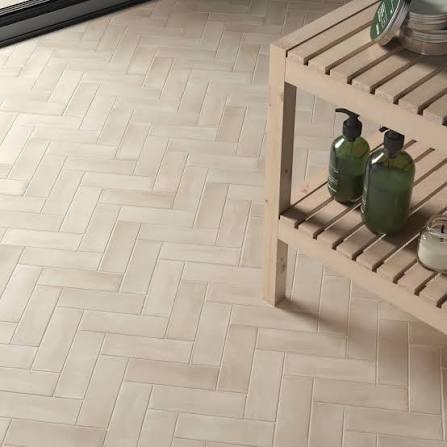
A skilled installation crew can lay vinyl tile in herringbone or chevron patterns, creating a high-design look that reads as significantly more expensive than the material cost. This is particularly popular in entryways, mudrooms, and powder rooms where a smaller square footage allows for a more dramatic statement. The key to making these patterns work is precise cutting and a layout plan developed before installation begins both of which are standard practice for a professional flooring crew.
Caring for Vinyl Tile Floors in a New Jersey Climate
One of the practical advantages of Vinyl Tile Flooring in Voorhees, NJ is how little it demands in ongoing maintenance. But “low maintenance” doesn’t mean “no maintenance,” and homeowners who understand how to care for their floors correctly will get more years of life from them.
Day-to-day care is simple: dry sweeping or vacuuming to remove grit (which acts as abrasive on the wear layer over time), and occasional damp mopping with a pH-neutral cleaner. Avoid steam mops the heat can compromise adhesive bonds and warp even click-lock products over time. Avoid wax-based cleaners, which leave a residue that dulls the finish. And use felt pads under heavy furniture legs to prevent indentation, which is the most common form of localized wear in residential vinyl tile floors.
In South Jersey’s climate, the humidity swings between summer and winter mean expansion and contraction are real factors. Rigid SPC products handle this better than earlier flexible vinyl, but maintaining consistent indoor humidity ideally between 35% and 55% extends the life of any resilient floor covering. This is particularly relevant in homes that close up completely during winter or summer travel.
What Vinyl Tile Flooring Services Cost in Voorhees, NJ: A Realistic Breakdown
Pricing for vinyl tile flooring in the Voorhees area depends on three primary factors: the product itself, the complexity of the installation, and the condition of the subfloor.
Product costs for standard vinyl tile range from roughly $1.50 to $3.00 per square foot for entry-level commercial-grade products. Mid-range LVT with realistic visuals and 12–20 mil wear layers runs $3.00 to $6.00 per square foot. Premium LVT from brands like Karndean or Provenza sits in the $6.00 to $10.00 range per square foot. These are material costs only.
Professional installation in the South Jersey market typically adds $2.50 to $5.00 per square foot, depending on whether the project involves glue-down or click-lock method, the complexity of cuts required, and the number of transition pieces needed. Subfloor preparation leveling compounds, adhesive removal, or structural repairs is often quoted separately based on what the assessment reveals.
For a typical Voorhees homeowner installing LVT across a 500-square-foot main floor, a realistic all-in budget including mid-range product, professional installation, and subfloor prep runs between $4,000 and $8,000. That number can move in either direction depending on what’s under the existing floor and how complex the layout is. Getting a specific in-home estimate eliminates the guesswork entirely, which is why we always offer a free on-site consultation before quoting any project.
Why Choosing a Local Voorhees Flooring Contractor Matters
There’s a meaningful difference between hiring a national big-box store’s installation subcontractors and working with an established local flooring company. Local contractors have a direct stake in their regional reputation. They’re not rotating crews between markets they live and work in the same communities their clients do.
Beyond accountability, local flooring professionals understand regional building conditions that matter. They know what subfloor conditions are typical in Voorhees-area homes built in the 1970s, 1980s, and early 2000s. They understand how the local climate affects material performance over time. And they’re available when something comes up six months after installation, not managing a phone queue across 40 states.
At Hardwood Flooring LLC, our work in Burlington and Camden County has been built entirely on referrals and repeat clients. That’s only possible when the installation quality holds up over time. When you’re making a decision that will affect your home for the next 15 to 25 years, that track record is worth more than a low bid from an unfamiliar name.
Here is a shorter conclusion:
Conclusion
Vinyl tile flooring is one of the smartest upgrades a Vinyl title flooring in Voorhees homeowner can make waterproof, durable, low-maintenance, and available in designs that genuinely rival hardwood and stone. The product matters, but the installation matters more. Rushed prep work and poor execution are what turn a good floor into an expensive redo.
At Hardwood Flooring LLC, we do the job right the first time. If you’re ready to move forward, contact us for a free in-home consultation and let’s find the right floor for your space.
Frequently Asked Questions
Why is vinyl tile better than hardwood for bathrooms and basements?
Vinyl tile is 100% waterproof in most LVT products, which means it handles moisture that would buckle or stain hardwood. In below-grade spaces like finished basements, where humidity and the risk of water intrusion are higher, vinyl tile is the professional standard recommendation.
Why does subfloor preparation matter so much?
Vinyl tile conforms closely to the surface beneath it. Any imperfection — a high spot, a low area, old adhesive residue — will eventually show through. Proper subfloor prep is the single biggest factor in how long an installation lasts and how good it looks after the first few years.
Why should I hire a professional instead of installing vinyl tile myself?
Click-lock vinyl tile is marketed as DIY-friendly, and technically it is. But layout planning, subfloor assessment, transition execution, and pattern alignment require experience that produces a noticeably different result. Professional installation also typically comes with a workmanship warranty that DIY does not.
Why does layer thickness matter when choosing vinyl tile?
The wear layer is the only thing protecting the printed design beneath from scratches, scuffs, and stains. A 6-mil layer is appropriate for very low traffic. A 20-mil layer is standard for kitchens or homes with dogs. Getting this specification right for your specific situation directly affects how long the floor looks new.
Why is LVT with a rigid core better for homes in South Jersey?
Rigid SPC or WPC cores resist the dimensional changes that temperature and humidity fluctuations cause. In a climate with hot, humid summers and cold winters which describes Voorhees and the surrounding area — rigid-core products maintain their integrity and keep seams tight in ways that flexible vinyl does not.
Why do installation costs vary so much between contractors?
The biggest variables are subfloor condition and the time required to address it properly. A contractor who bids low often skips thorough prep work. That saves money on day one and costs significantly more when the floor needs to be redone in three to five years.
Why is Hardwood Flooring LLC a good choice for vinyl tile installation in Voorhees, NJ?
We bring hands-on experience with the full range of LVT and resilient flooring products, a thorough pre-installation process that protects our clients’ long-term investment, and a track record built entirely on results in the South Jersey market. Our goal on every project is a floor you’re still satisfied with a decade from now.